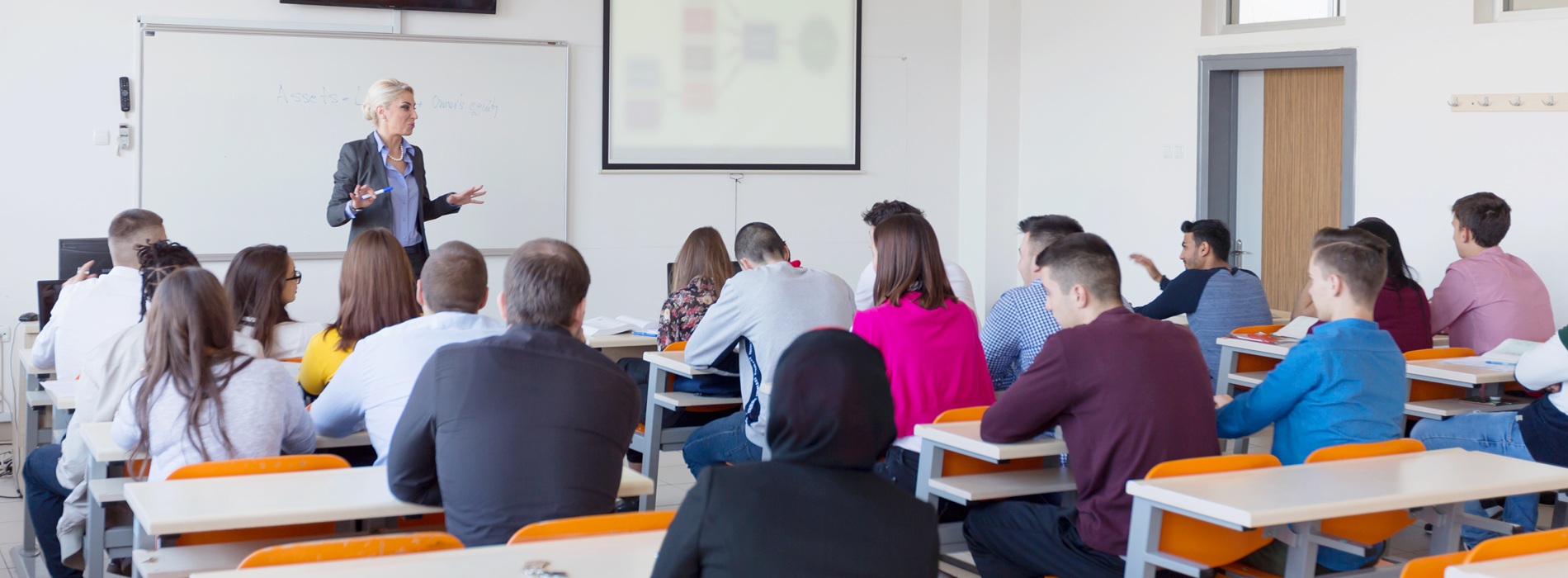
Peer Observation of Teaching
The Teaching Faculty and Support Center offers faculty the opportunity to reflect on and strengthen their instructional practices through peer observation of teaching. This confidential and non-evaluative process allows instructors to partner with trained peers to exchange feedback, explore new approaches, and gain fresh insight into student learning. By engaging in pre- and post-observation conversations alongside a classroom visit, faculty can refine their teaching, document effectiveness, and contribute to a culture of continuous improvement.
These faculty members have completed the peer observation training and are willing to do scheduled peer observations. You should contact them directly to ask whether they have openings to do a peer observation. Since they are observing your teaching and not evaluating course content, it is not necessary to pick an observer from your area of expertise.
- Mindy Bradley, Sociology and Criminology, mwbradl@uark.edu
- Richard Cassady, Industrial Engineering, cassady@uark.edu
- Sarah Hixson, School of Human Environmental Sciences, swhixson@uark.edu
- Shanda Hood, Mathematical Sciences, hoods@uark.edu
- Don Johnson, Agricultural Education, Communications, and Technology, dmjohnso@uark.edu
- Deb Korth, Student Success and Math, dkorth@uark.edu
- Peggy Lee, School of Nursing, pblee@uark.edu
- Faith Lessner, Biological Sciences flessner@uark.edu
- Christine Ralston, Curriculum and Instruction, cralston@uark.edu
- Samantha Robinson, School of Human Environmental Sciences, sewrob@uark.edu
- Manuel Rossetti, Industrial Engineering, rossetti@uark.edu
- Carole Shook, Information Systems, CShook@walton.uark.edu
- Carl Smith, Architecture, cas002@uark.edu
- Heather Walker, Chemical Engineering, hlw@uark.edu
- Kasey Walker, Communication, klwalker@uark.edu
- Faculty discontent with Student Evaluation of Teaching
- Faculty should provide additional items (beyond student evaluations) to document teaching. AP 1405.11 (F.1. Criteria for Faculty Performance)
- Improve teaching by:
- Engaging in non-judgmental, constructive dialogue between peers
- Engaging in self and mutual reflection about teaching practices
- Exposure to different teaching perspectives and practices
- Document teaching effectiveness through:
- Classroom observation by respected peer(s)
- Written observation report
- Create a voluntary Community of Practice by:
- Breaking down disciplinary silos
- Making teaching a “public” practice
- Providing opportunities for conversations about teaching and learning
- Providing a community of peer observers
- Voluntary
- Confidential (The person observed is given the report and they can decide how to use the information)
- Peer-to-Peer
- Cooperative, not evaluative
- Formative, not summative
Step One: Pre-Observation Meeting
- Informal/In-person
- Develop rapport
- Provide mutual understanding of peer observation process
- Learn about course and students
- Discuss instructor’s specific goals for the peer observation
- Schedule date/time/location
- Determine topic and instructor goals for class session
Step Two: Classroom Observation
- Observer arrives early / sit in back of classroom
- Complete “Peer Observation of Teaching” Timeline form
- Observer pays special attention to:
- Instructor identified goals
- Students engagement and interaction
- Understanding
- Instructor clarity
- Rapport/Respect
- Management/Support of learning
Step Three: Post Observation Discussion and Report
- Observer prepares observation summary for discussion
- Meets with instructor to discuss observation summary
- Emphasizes positive points
- Offer non-judgmental suggestions
- What would happen if . . . ?
- Incorporates feedback into written summary
- Writes/delivers written summary document